- English
- Español
- Português
- русский
- Français
- 日本語
- Deutsch
- tiếng Việt
- Italiano
- Nederlands
- ภาษาไทย
- Polski
- 한국어
- Svenska
- magyar
- Malay
- বাংলা ভাষার
- Dansk
- Suomi
- हिन्दी
- Pilipino
- Türkçe
- Gaeilge
- العربية
- Indonesia
- Norsk
- تمل
- český
- ελληνικά
- український
- Javanese
- فارسی
- தமிழ்
- తెలుగు
- नेपाली
- Burmese
- български
- ລາວ
- Latine
- Қазақша
- Euskal
- Azərbaycan
- Slovenský jazyk
- Македонски
- Lietuvos
- Eesti Keel
- Română
- Slovenski
- मराठी
- Srpski језик

How Does a Soft Door Curtain Machine Improve Industrial Production Efficiency and Product Quality?
In modern industrial manufacturing, the demand for efficient, hygienic, and durable soft door curtain solutions continues to grow across logistics, cold storage, food processing, and cleanroom environments. Automated production equipment plays a decisive role in meeting this demand at scale. Among these innovations, advanced curtain extrusion and forming systems, such as the Soft Door Curtain Machine, have become essential for manufacturers seeking consistency and cost efficiency. This article explores the working principles, applications, technical structures, and investment value of this key piece of equipment used in this industry, while also answering the most frequently asked questions and providing practical insights for decision-makers.
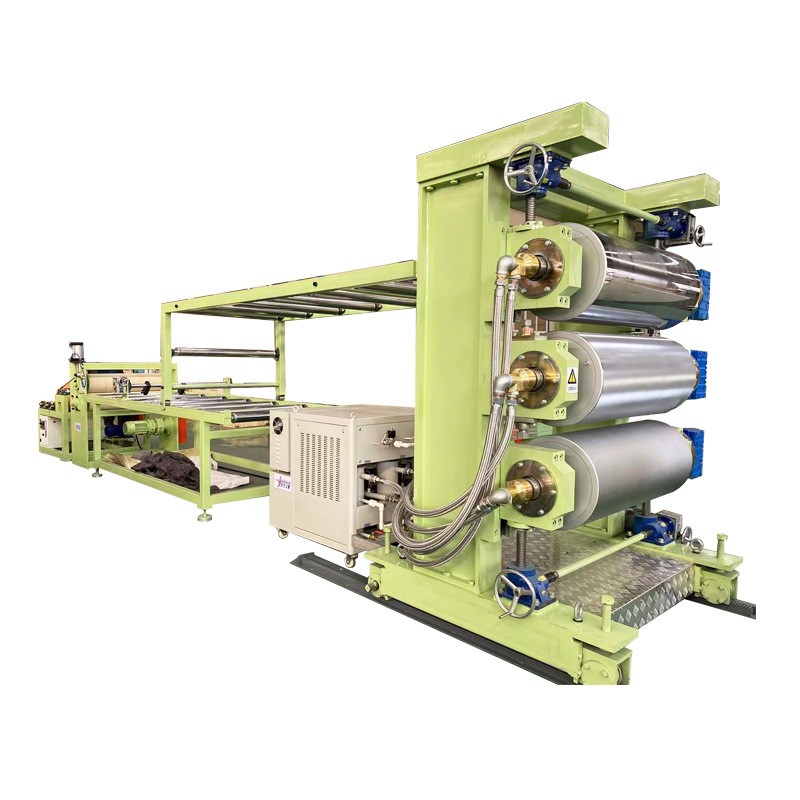
Table of Contents
- 1. Industry Demand and Market Background
- 2. What Is Soft Door Curtain Production Technology?
- 3. Key Structural Components of the System
- 4. Working Principle and Process Flow
- 5. Material Compatibility and Product Applications
- 6. Automation Advantages and Production Efficiency
- 7. Technical Specifications Overview
- 8. Maintenance and Operational Guidelines
- 9. Cost Analysis and ROI Evaluation
- 10. Frequently Asked Questions (FAQ)
- 11. Final Insights and Industry Outlook
Suggested SEO Question Titles (Topic Expansion)
- How Does a Soft Curtain Production System Improve Manufacturing Efficiency?
- What Are the Benefits of Automated PVC Curtain Extrusion Equipment?
- Why Is Industrial Curtain Manufacturing Automation Becoming Essential?
- How Can Factories Reduce Cost With High-Speed Curtain Production Systems?
- What Makes Modern Curtain Extrusion Machines More Energy Efficient?
1. Industry Demand and Market Background
Global logistics expansion and stricter hygiene regulations have significantly increased the demand for flexible partition solutions. Warehouses, supermarkets, cold chain facilities, and industrial workshops require durable barriers that can regulate airflow, temperature, and contamination risks. As manual production methods struggle to keep up with volume and consistency requirements, automation becomes the preferred solution.
Manufacturers investing in advanced extrusion systems are better positioned to meet these growing demands while maintaining consistent product quality and minimizing labor dependency.
2. What Is Soft Door Curtain Production Technology?
Soft door curtain manufacturing technology refers to a continuous extrusion and forming process that produces PVC-based flexible strips used in industrial doorway partitions. These systems typically integrate raw material feeding, heating, extrusion, cooling, cutting, and winding into a single automated workflow.
At the center of this production line is the Soft Door Curtain Machine, which ensures precise material shaping, consistent thickness control, and smooth surface finishing across long production cycles.
3. Key Structural Components of the System
- Material Feeding System – Ensures stable raw PVC input
- Extrusion Unit – Melts and shapes polymer materials
- Molding Die Head – Defines curtain strip geometry
- Cooling Tank – Stabilizes product structure
- Haul-Off System – Controls line speed and tension
- Cutting Unit – Provides precise length control
- Winding Device – Collects finished products efficiently
Each component plays a critical role in ensuring the final output meets industrial durability and transparency standards.
4. Working Principle and Process Flow
The production process begins with raw PVC pellets being fed into a heated barrel where they are melted and homogenized. The molten material is then pushed through a custom-designed die head, forming continuous curtain strips.
Immediately after shaping, the material passes through a cooling tank to solidify its structure. The haul-off unit regulates speed consistency, preventing deformation or stretching inconsistencies. Finally, cutting and winding systems prepare the finished rolls for packaging and distribution.
In this entire workflow, the Soft Door Curtain Machine ensures stability, precision, and repeatability, which are essential for mass production environments.
5. Material Compatibility and Product Applications
Modern systems support a wide range of materials including PVC, soft vinyl, and modified thermoplastic compounds. This flexibility allows manufacturers to produce curtains suitable for different environmental conditions.
- Cold storage insulation curtains
- Warehouse entry partitions
- Food processing hygiene barriers
- Industrial dust control curtains
- Commercial refrigeration doors
These applications require consistent clarity, flexibility, and durability, all of which depend on precise production control.
6. Automation Advantages and Production Efficiency
Automation significantly reduces human error, improves production speed, and ensures product consistency. Compared with manual or semi-automated systems, fully integrated extrusion lines provide higher output capacity and lower operational cost per unit.
A modern production system such as the Soft Door Curtain Machine enhances efficiency through intelligent temperature control, synchronized motor systems, and real-time monitoring interfaces.
- Reduced labor dependency
- Higher production speed
- Improved dimensional accuracy
- Lower material waste
7. Technical Specifications Overview
| Parameter | Typical Range |
|---|---|
| Production Speed | 5–30 m/min |
| Material Type | PVC / Soft Vinyl |
| Power Consumption | 30–120 kW |
| Cooling System | Water Circulation |
| Control System | PLC Intelligent Control |
These specifications vary depending on production scale and customization requirements.
8. Maintenance and Operational Guidelines
Proper maintenance ensures long-term stability and reduces unexpected downtime. Operators should regularly inspect heating elements, lubrication systems, and electrical connections.
- Clean extrusion barrel weekly
- Check cooling water quality regularly
- Calibrate die head alignment monthly
- Inspect motor belts and gears
Preventive maintenance significantly extends equipment lifespan and improves output consistency.
9. Cost Analysis and ROI Evaluation
Investing in automated production systems requires careful financial evaluation. While initial setup costs may be higher, long-term savings in labor, waste reduction, and production efficiency lead to a strong return on investment.
Factories using advanced systems such as the Soft Door Curtain Machine often achieve payback within 12–24 months depending on production scale.
- Lower per-unit production cost
- Reduced defect rate
- Higher throughput capacity
10. Frequently Asked Questions (FAQ)
Q1: What materials can be processed?
PVC, soft vinyl, and thermoplastic elastomers are commonly used.
Q2: Is operator training required?
Yes, basic training is recommended for safe and efficient operation.
Q3: How long does installation take?
Typically between 3–7 days depending on factory setup.
Q4: Can output be customized?
Yes, thickness, width, and transparency can be adjusted.
11. Final Insights and Industry Outlook
The future of industrial curtain production lies in automation, precision engineering, and energy-efficient systems. As global industries continue to prioritize hygiene, logistics efficiency, and environmental control, demand for advanced production equipment will continue to grow.
A trusted solution provided by Qingdao Eaststar Plastic Machinery Co., Ltd. demonstrates how engineering expertise and manufacturing innovation can support scalable industrial growth.
In conclusion, investing in advanced production technology is not just about improving output—it is about securing long-term competitiveness in a rapidly evolving global market.
contact us today to learn more about customized production solutions and technical support for your manufacturing needs.